
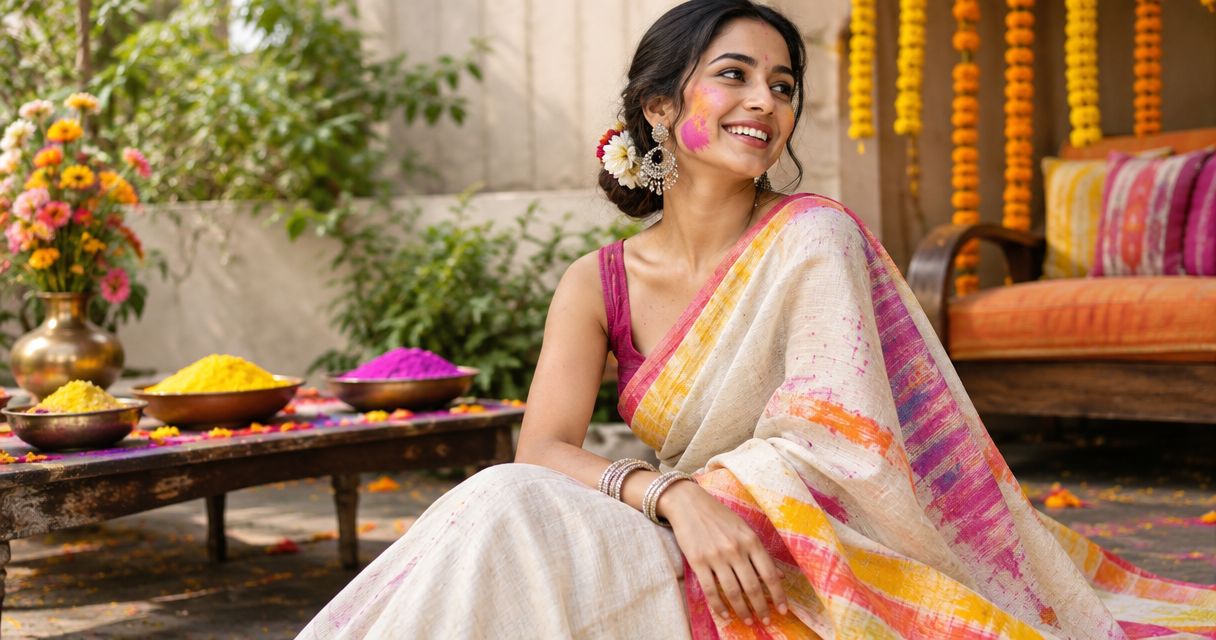
Best overall for Holi in 2026: a Siakari handloom cotton saree for an active daytime celebration. Choose a dark cotton saree if visible marks concern you, or a linen saree for a dry lunch. These 10 holi sarees are ranked by where you can comfortably wear them—not by how festive they look before the colours come out.
- Siakari handloom cotton is the best overall choice among holi sarees for active daytime wear.
- Dark cotton makes colour marks less noticeable; it does not prevent staining.
- Choose linen or silk for dry celebrations, not unrestricted colour play.
- Check the saree's care instructions before exposing it to water or colour.
Why this matters
A saree that works for a Holi lunch is not necessarily the one you want in a crowd throwing colour. Fabric, drape and your plans matter more than a festive label. For Holi in 2026, decide first whether you expect water, dry colour, a meal with no colour play, or a mix of all three.
No fabric choice guarantees that colour will wash out. If a saree matters to you, check its care instructions and keep it away from colour unless you accept the possibility of a lasting mark.
What makes the best holi sarees?
- Freedom to move: You should be able to walk, sit and manage the drape without repeatedly adjusting it.
- Comfort in heat: Consider how the fabric feels during the part of the day you will actually wear it.
- Colour exposure: A darker or patterned surface can make uneven marks less obvious, but cannot stop staining.
- Drape and coverage: Check the fabric in daylight and plan a secure blouse and petticoat pairing.
- Care requirements: Read the garment label before treating a colour mark or washing the saree.
For 2026, use those checks as a decision sequence: choose your level of colour exposure, then choose the fabric and appearance you want. The table separates sarees suited to active play from options better kept indoors.
The 10 best Holi sarees at a glance
| Saree option | Best for | Standout feature | Key limitation |
|---|---|---|---|
| Siakari handloom cotton | Active daytime celebration | Familiar cotton drape | Can absorb water and colour |
| Dark cotton | Less-visible marks | Dark surface masks some marks | Still stains |
| Printed cotton | Uneven colour marks | Pattern interrupts visible marks | Print needs appropriate care |
| Mulmul cotton | Lightweight daytime wear | Soft, light feel | Drape needs checking in daylight |
| Khadi cotton | A structured look | More defined drape | Can feel less fluid |
| Kota Doria cotton | Airy, mostly dry gathering | Open, light weave | Check coverage and snag risk |
| Cotton-linen blend | Indoor and outdoor plans | Balance of two fabric types | Feel varies by blend |
| Linen | Dry daytime lunch | Defined, relaxed drape | Creases visibly |
| Handloom silk | Indoor family gathering | Dressier fabric choice | Keep away from colour play |
| Banarasi silk | Formal, colour-free event | Occasion-focused look | Poor match for active play |
Siakari handloom cotton is the default pick for women who want a traditional saree for an active Holi day. The options below serve narrower plans. The ranking is about suitability for those plans, not a claim that every named style is in one store's catalogue.
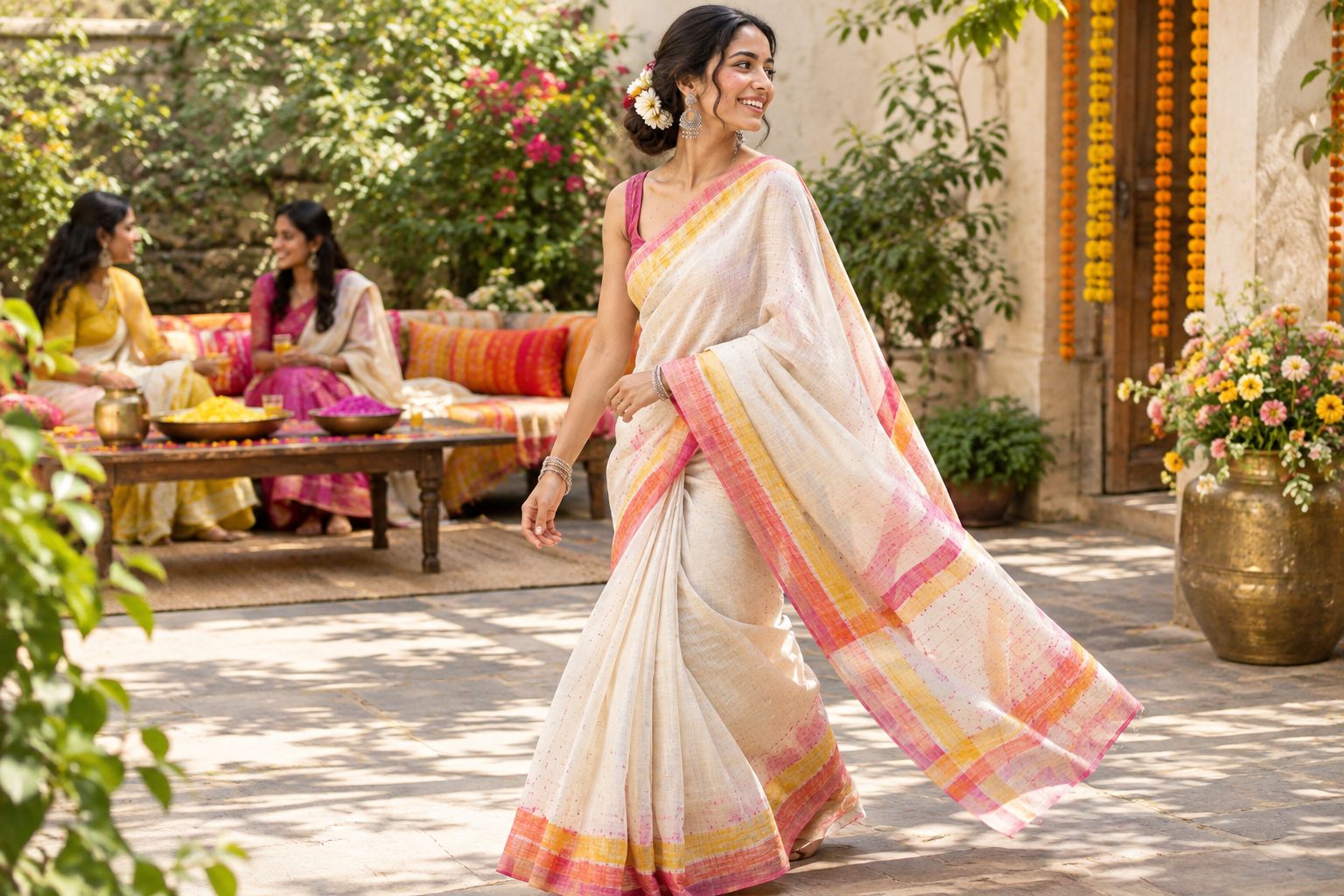
1. Siakari handloom cotton: best for active daytime Holi
A handloom cotton saree is the strongest general-purpose choice when you expect to move around rather than stay seated. Siakari sells handloom sarees in cotton; check the particular saree's colour, weight and care instructions before choosing it for colour play.
Siakari handloom cotton pros:
- Cotton is a practical fabric to consider for daytime wear.
- A familiar drape makes movement easier to plan.
- It works with a blouse and petticoat you already know fit securely.
Siakari handloom cotton cons:
- Cotton can absorb water and colour.
- Fabric choice alone tells you nothing about a particular dye's colourfastness.
Best for: An active celebration where comfort takes priority over keeping the saree spotless. Verdict: Buy if you accept the risk of colour marks.
2. Dark cotton: best for less-visible marks
Dark cotton is a visual choice, not a stain-proof one. It suits you if you expect scattered colour marks and would rather they stand out less during the event.
Dark cotton pros:
- Some colour marks are less conspicuous against a dark surface.
- Cotton remains a straightforward daytime fabric choice.
- It does not depend on a delicate decorative finish.
Dark cotton cons:
- Dark fabric can still stain or lose colour during care.
- The result depends on the actual shade and colour thrown.
Best for: Colour play when the saree's appearance during the day matters more than a pristine finish afterward. Verdict: Buy only after checking the care label.
3. Printed cotton: best for uneven colour marks
A print breaks up a plain field of fabric, so isolated marks draw less immediate attention. Printed cotton makes sense when you want a visibly festive saree without treating it as an investment piece for a dry ceremony.
Printed cotton pros:
- A pattern interrupts the appearance of uneven marks.
- You can choose a print that suits your own blouse.
- Cotton fits an informal daytime setting.
Printed cotton cons:
- A print does not prevent permanent staining.
- Care instructions vary by garment and printing method.
Best for: An informal gathering where you expect dry colour and do not need a plain finish. Verdict: Buy if the care label fits your plans.
4. Mulmul cotton: best for lightweight daytime wear
Mulmul cotton is a choice for someone who puts a light, soft feel first. Before wearing it to a crowded event, check how your chosen saree drapes over its petticoat in daylight.
Mulmul cotton pros:
- Its light feel suits a long daytime outing.
- Soft folds can be comfortable when you sit or walk.
- It fits a casual celebration.
Mulmul cotton cons:
- A light drape needs deliberate pleating and securing.
- Coverage depends on the actual fabric and what you wear beneath it.
Best for: A warm daytime plan with gentle movement rather than rough colour play. Verdict: Hold until you have checked the drape and coverage.
5. Khadi cotton: best for a structured drape
Khadi cotton offers a more defined look than a very soft cotton drape. Choose it if you like visible pleats and have time to arrange them before leaving.
Khadi cotton pros:
- The fabric's texture gives the outfit a distinct look.
- Defined pleats suit a simple blouse pairing.
- It is an alternative to a fluid, lightweight drape.
Khadi cotton cons:
- Its feel and weight vary by saree.
- A firmer drape is less appealing if you want soft folds.
Best for: A daytime gathering where a structured silhouette matters. Verdict: Hold until you have handled the particular fabric.
6. Kota Doria cotton: best for an airy, mostly dry gathering
Kota Doria's open weave makes it a candidate for an airy daytime outfit. Its sheerness and delicacy deserve more attention than its appearance in a product photograph.
Kota Doria cotton pros:
- The open weave gives a light visual effect.
- It suits a gathering centred on conversation and food.
- It offers a different look from solid cotton.
Kota Doria cotton cons:
- Check coverage against your blouse and petticoat.
- The weave is a poor choice for snag-prone, crowded play.
Best for: A mostly dry celebration where you want a light saree. Verdict: Hold if you expect jostling or water.
7. Cotton-linen blend: best for mixed indoor and outdoor plans
A cotton-linen blend is an option when your day moves between a meal indoors and time outside. The proportion of each fibre changes the feel, so the garment description matters more than the blend name.
Cotton-linen blend pros:
- It gives you an alternative to pure cotton or pure linen.
- It fits an outfit planned for more than one setting.
- You can judge its drape before the event.
Cotton-linen blend cons:
- Blends do not share one predictable texture.
- Creasing and care depend on the specific garment.
Best for: A mixed itinerary with limited colour play. Verdict: Hold until you know the fabric composition and care instructions.
8. Linen: best for a dry daytime lunch
Linen belongs at a Holi lunch where the dress code is festive but colour play is not part of your plan. Its visible creases are part of the decision: choose it if you are comfortable with them.
Linen pros:
- It gives a daytime outfit a distinct, relaxed drape.
- It works when you expect to sit and talk rather than run through a crowd.
- It offers a change from cotton.
Linen cons:
- Linen creases visibly.
- A dry-lunch choice is not a recommendation for wet colour play.
Best for: A colour-free meal or visit. Verdict: Buy for the lunch; skip it for active play.
9. Handloom silk: best for an indoor family gathering
Siakari sells handloom silk sarees, but silk is a different decision from cotton for Holi. Wear it when the celebration is indoors and you can keep the saree away from thrown colour and water.
Handloom silk pros:
- It fits a dressier family occasion.
- It gives you a formal alternative to daytime cotton.
- It works when your plan does not include colour play.
Handloom silk cons:
- Colour exposure creates an avoidable care problem.
- It does not fit an unrestricted outdoor celebration.
Best for: A clearly colour-free indoor gathering. Verdict: Skip for the colour-play portion of the day.
10. Banarasi silk: best for a formal, colour-free event
Banarasi silk is an occasion choice, not a default Holi-play saree. If your 2026 plans include a formal visit separate from the colour celebration, it can have a place in that part of the day.
Banarasi silk pros:
- It suits a formal dress code.
- It offers a different silhouette from casual cotton.
- It makes sense when you are dressing for the gathering, not the game.
Banarasi silk cons:
- Thrown colour and water conflict with the purpose of this pick.
- It is less practical for constant movement and adjustments.
Best for: A formal event with no colour play. Verdict: Skip if you cannot keep it separate from the festivities.
How these picks are ranked
The ranking puts movement, comfort, exposure to colour and garment care ahead of formality. That is why Siakari handloom cotton leads for active Holi in 2026, while silk sits at the bottom despite being suitable for a different kind of gathering. A dark shade or print affects how marks look; neither changes a garment's care requirements.
Before you dress, make 3 checks: read the care label, view the drape in daylight, and move around in the blouse and petticoat you intend to wear. Pack 1 spare blouse if a change of clothes is part of your day. Those small decisions do more for comfort than buying a saree on colour alone.
Which Holi saree should you choose?
For an active celebration, choose a Siakari handloom cotton saree whose care instructions and appearance you are comfortable with. Choose dark or printed cotton if your priority is making marks less noticeable during the event. For a dry 2026 lunch, choose linen; reserve silk and Banarasi silk for celebrations without colour play.
FAQ
What are the best holi sarees for active colour play?
Handloom cotton is the best overall fabric choice in this list for an active daytime celebration. Accept that colour can leave marks, and check the individual saree's care instructions first.
Is a dark saree better for Holi?
A dark saree can make some colour marks less noticeable during Holi. It cannot prevent staining or tell you whether a dye will wash out.
Can I wear a linen saree for Holi?
Yes, wear linen for a dry Holi lunch or gathering. Choose cotton instead when your plans centre on active colour play.
Should I wear a silk saree to a Holi party?
Wear silk only if the gathering is separate from thrown colour and water. For active celebrations, a cotton saree is the more practical choice in this ranking.
Does printed cotton resist Holi colour?
No, a print does not make cotton resist Holi colour. It can make uneven marks less obvious while you wear the saree.
How do I choose a saree for Holi in 2026?
Decide how much colour exposure you expect, then check fabric, coverage, movement and care instructions. Siakari handloom cotton is the default pick here for an active daytime plan.
One last thing
A saree does not need to survive colour play to be a good Holi outfit; it needs to fit the part of the celebration you will actually attend. If your 2026 day includes both active play and a formal gathering, plan a change of saree rather than asking one fabric to do both jobs.